
This interview was conducted by Shepherd Mutsvara, a researcher in the COFUND project Migration, Diaspora, Citizenship, with Jessica Bruckner, project coordinator at Radio Kaktus Münster. In this conversation, Jessica reflects on the role of community media in bridging language and cultural barriers, the practical challenges of multilingual programming, and how organisations like Radio Kaktus support the resilience of migrant communities amid significant funding pressures.
Q: Could you introduce yourself and Radio Kaktus Münster?
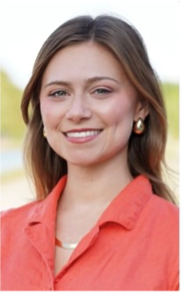
A: My name is Jessica Bruckner. I’m here on behalf of Radio Kaktus Münster. We do a lot of outreaches: we produce a radio broadcast, and we also have a museum. We’re available to the community and are mostly dedicated to children and youth in many ways. I worked for many years with a cooperation partner, an association in the same field called AFAQ e.V. Their focus is more on refugees and recent migrants, not only children and youth. Through my volunteering there, I learned about Kaktus and its programmes as well. [At Kaktus] I help design, organise, and deliver workshops for children and youth. We also plan social and cultural events. We publish different types of media: radio, of course, but also books, video, and other formats.
Q: Who are the children and young people you work with?
A: We primarily focus on children with a migrant background, though local children are not excluded. Our focus is on the needs of the migrant community. Many participants have Turkish backgrounds, backgrounds from different Arab states, Ukrainian backgrounds, and African backgrounds as well.
Q: How do people join the programmes: do you recruit them, or do they come to you?
A: It depends on age. With children, they usually come through schools or school-affiliated organisations. A key focus is interculturality, for example, how children can interact and play with classmates who don’t share the same language. We see this especially with Ukrainian refugees integrating into the school system. For youth, older teens and people in their early twenties, they often come for internships via an academic institution and spend the full internship period with us, usually working with the radio. When we offer new programmes, we do go from school to school and speak with school social workers or coordinators who can refer students. But that isn’t our main responsibility. We’ve been active in Münster for over 50 years, so we’re relatively well known at the city level.
Q: Language is a major issue for many migrants. How does Radio Kaktus bridge that gap?
A: It’s difficult, it’s a big challenge, and we know it firsthand as migrants ourselves. Within the organisation we currently have German, English, Turkish, and Polish represented. However, we don’t provide all those languages in the materials we publish or in the training we provide to interns. Workshops are offered in German and English. Other languages aren’t something we can offer now, and that’s a challenge. That said, children learn languages quickly, and in our experience German or English usually covers a large enough group.
Q: Do you have radio segments specifically for migrant communities?
A: Yes. We broadcast in the Bürgerfunk format, which means we have a dedicated broadcast slot, currently twice a month. We are a nonprofit association, so we need to secure funding for that broadcast spot. One of the stipulations of that funding is that we must incorporate multilingualism. Typically, that comes in the form of Turkish or Farsi, though it is certainly not limited to those languages. That said, about 90 to 95 percent of the broadcast content is in German. Sometimes we provide translations from the original language into German, but overall, we are German-language focused. For each broadcast, however, we feature a “spotlight” interview with a local artist or someone active in the community, and we prioritise people with a migration background.
Q: As a migrant yourself, you have spoken about resilience being central to migrant experience. How does community radio promote resilience and support migrants in coping?
A: Most of us working there are migrants, and many of our interns have migrant backgrounds too. We hope that if interns feel self-doubt, especially in professional settings, we can reduce that through practical experience. They can bring their own ideas and see them realised through projects in radio, video, or other media. They practise speaking on a microphone or in front of a camera. We also address themes like pacifism and criticism of anti-democratic tendencies. We discuss how to create programmes for people coming from regions affected by war or conflict and how to offer material that draws on firsthand experience. For example, we are working on an anthology with contributions from professors and experts. We hope to use it in a youth workshop series: invite a contributor to speak and then discuss democratic topics with young people.
Q: Do staff members share their own experiences as migrants?
A: It depends on the definition of the term migrant. Official definitions used locally can include people with up to three generations of migrant background. I’m the only one on the team who was born outside Germany. Two coworkers have migrant backgrounds but were born here and speak German as their native language, so their experiences overlap more with each other than with mine. Our director is also a migrant and has worked hard to build a standing in the city. He is from the Turkish guest-worker generation.
Q: Can radio help migrants feel at home?
A: The question is reach: how many people have a radio now? Many people listen in cars, but new arrivals may not have cars. Some may listen at work. And do people know we exist, and do they speak enough German to connect with the topics? That is a genuine concern. Our broadcast is currently on the last Wednesday of every month and the first Monday of every month, around 8 p.m., on Antenne Münster (95.4 FM). You can listen online or on the radio.
Q: How much does the current political climate, including right-wing extremism and anti-migrant sentiment, affect your programming?
A: It doesn’t affect us in the sense of taking sides. We are called “Kaktus” for a reason: we don’t prioritise any one political party or belief. Sometimes we are asked to do professional media work, videos or interviews, for political parties; if we do it for one, we do it for essentially all. But political developments can influence which topics appear in broadcasts, for example, far-right extremism or proposed changes to mandatory military service.
Q: What are the major challenges you face going forward?
A: The future is uncertain. Funding for this sector is unstable right now. We are seeing around a 70% reduction in available funds. That creates uncertainty across associations trying to secure funding for next year and upcoming quarters. At the moment, we are not stopping our work. We take interns continuously and try to listen to their needs and support how they want their work to develop.
Q: Despite the challenges, do you still see Radio Kaktus as a source of strength and support in the community?
A: We hope so. Even if we must restructure because of funding, I believe we can still provide valuable work. One future idea is to expand beyond radio into public-access television with a live format. That won’t happen soon due to current constraints, but it is something we are interested in how we can be more present and reach more citizens in an increasingly digital environment. One of our core pillars is that we see multilingualism and multiculturalism not as a threat, but as something that enriches the community.